
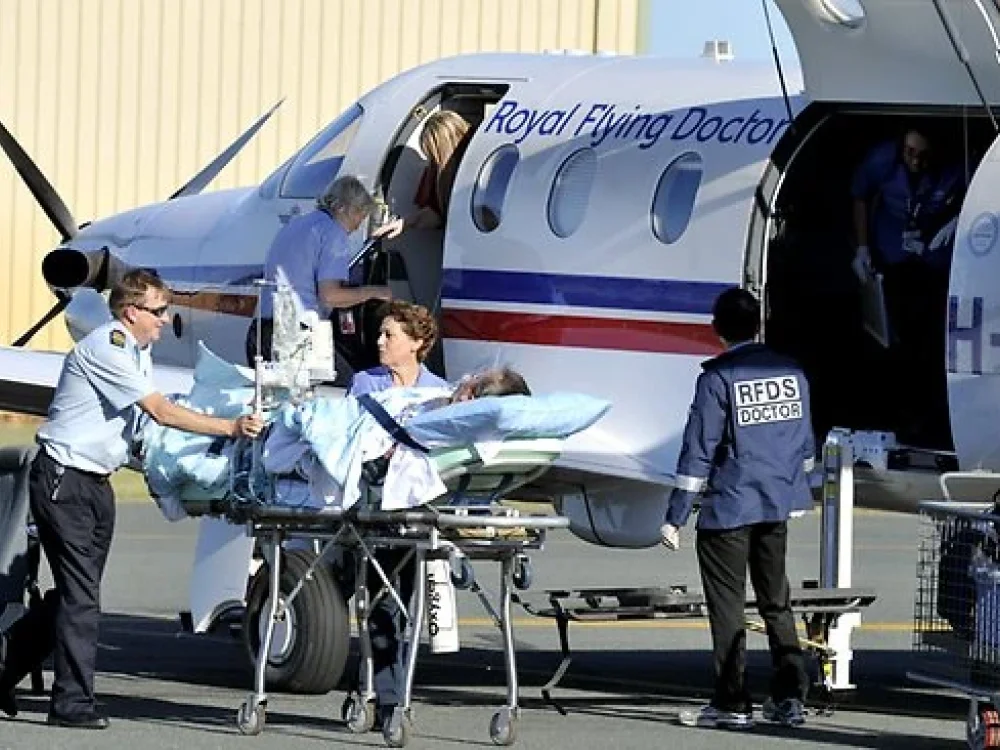
A proud Australian icon since its first flight in 1928, the RFDS runs 23 bases and more than 80 aircraft, with over 900 patient contacts a day. Maintaining the communications link behind that operation is not optional.
The Royal Flying Doctor Service has flown since 1928 and now operates 23 bases and more than 80 aircraft, with over 900 patient contacts a day across remote Australia. Its Western Australian operation depends on a phone and radio network that reaches doctors wherever they are. CallTech records it.
The Issue
People in remote Western Australia seeking medical help call the RFDS 1800 emergency number. A call centre operator either helps the caller directly or transfers them to the mobile phone of the rostered doctor.
Only the call centre phones were being recorded. Once a call was transferred to a doctor’s mobile it left the call centre, and the rest of the conversation was lost. RFDS needed those transferred calls recorded as well, but for privacy reasons no other RFDS calls could be kept.
The Solution
CallTech installed a Red Box recorder able to record every line into the RFDS building, then keep only the emergency calls. A small application written by CallTech held the list of emergency numbers and told the recorder, call by call, whether to keep or discard the recording. Every relevant call to a rostered doctor was captured and logged to a secure, permanent archive, and nothing else was.
RFDS has since moved from physical phone lines to VoIP/SIP trunks. The recorder was reconfigured to capture the SIP traffic directly, which made the filtering application unnecessary. The system is now simpler and more reliable than the original.
The same recorder also captures radio transmissions between pilots and RFDS bases across Western Australia, delivered as Radio over IP (RoIP) through Omnitronics gateways. With telephony arriving as SIP and radio as RoIP, every source reaches the recorder over the network, so it now runs as a virtual machine, and RFDS has added a second Red Box recorder in a data centre as a standby.
Every relevant call to a rostered doctor is now automatically identified, recorded and logged to a secure, permanent archive - and nothing else is.